Department of History and American Studies

PBS Series Shows UMW Alum Taking High School Team to National Civics Competition

Before Sam Ulmschneider ’06 attended the University of Mary Washington, he put his political prowess to the test in the nation’s premier civics competition for high school students.
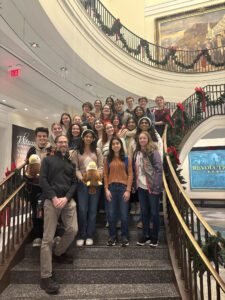
Sam Ulmschneider '06 (seen here with his students at the Museum of the American Revolution in Philadelphia), who majored in history and philosophy at UMW, has led his students at Maggie L. Walker Governor's School in Richmond to several national championships in the We the People civics competition. Last year's event was chronicled in a PBS documentary series. Photo courtesy of Sam Ulmschneider.
Sam Ulmschneider ’06 (seen here with his students at the Museum of the American Revolution in Philadelphia), who majored in history and philosophy at UMW, has led his students at Maggie L. Walker Governor’s School in Richmond to several national championships in the We the People civics competition. Last year’s event was chronicled in a PBS documentary series. Photo courtesy of Sam Ulmschneider.

In We the People, “we were asked to consider complex questions of public policy and political theory,” said Sam, who participated with his classmates in simulated congressional hearings before a panel of judges during the competition. “That experience is the reason I was motivated to study history and philosophy at Mary Washington.”

Today, Sam teaches those subjects and more at his alma mater, Maggie L. Walker Governor’s School in Richmond, where he has coached the school’s team to state championships and led it to three of its five national wins. While preparing for last year’s event, his class was spotlighted in Citizen Nation, a four-part PBS documentary series that followed teens and their teachers as they vied to secure a spot among the top 10 schools in the country – and win it all.

“I took We the People when it was a fairly young course,” Sam said. His teacher, Phil Sorrentino, “challenged us to think critically and argue our own views with a great deal of passion and engagement.”

The class primed him for the challenging coursework he found at UMW, where he read Plato’s Republic in a first-year seminar with Professor Emeritus of Philosophy David Ambuel, who he said had a “powerful impact” on his decision to major in the subject.

Sam said that Professor of History Susan Fernsebner inspired him to consider pursuing a Ph.D. “In her classes, we were reading popular novels and cultural and anthropological theory, which demonstrated how you could integrate other fields of study into history. That seemed new and enthralling to me as an undergraduate.”

After graduation, Sam planned to go into academia, earning a master’s degree in history from Virginia Commonwealth University. Yet, in 2011, he returned to Maggie L. Walker, which serves academically gifted students with an emphasis on government and international studies. He earned the James Madison Fellowship in 2020, a $24,000 award that helped him obtain a second master’s degree in American government and history from Ohio’s Ashland University.

Sam currently teaches Advanced Placement courses, American popular culture, and political philosophy, as well as his favorite, We the People, which is part of a comprehensive curriculum developed by the Center for Civic Education in 1987. Under his guidance, students hone skills in oral argument and rhetorical writing and engage in legal, political, and philosophical research to prepare for state and national competitions.

“Of all the classes I teach, it’s the one that alumni have told me is the most valuable, even years and decades later,” said Sam, whose students have gone to prestigious law schools such as Harvard and Columbia and embarked on careers in public policy and serving political campaigns.

And a few have ended up at Mary Washington, including junior Ben Dickinson, who is grateful for Sam’s mentorship. “We the People prepared me academically to major in political science and bolstered my love for constitutional studies,” said Ben, who is taking U.S. Constitutional Reform this semester, a course taught by UMW Professor of Political Science Steve Farnsworth.

Sam said that the PBS series captured the energy and spirit that makes the class and competition such a meaningful experience for high school students. He recently joined a screening and panel discussion with the director, his students, and State Sen. Schuyler VanValkenburg, a fellow teacher and the father of one of his students, whose Richmond-area team also competed in the finals.

“It paints a strikingly patriotic portrait of America, watching the genuine level of civic engagement and mutual sympathy these students have for each other while working through these challenging questions we’re all struggling with as a society,” Sam said. “If you find yourself becoming cynical about young people, this series will remind you that the kids are alright.”

– Article written by Assistant Director of Advancement Communications Jill Graziano Laiacona ’04
Alumna, Author Uncovers Hidden Black History in Great Lives Lecture, Feb. 8

An archaeological dig revealed the remnants of a notorious slave jail in Richmond. The groundbreaking discovery led journalist and Mary Washington graduate Kristen Green ’95 to use different tools to unearth information about Mary Lumpkin, a formerly enslaved woman who began her family’s quest for freedom on that site.

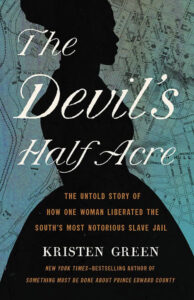
Kristen, an award-winning reporter and author, utilized the writing, critical thinking and rigorous research skills she honed through her college journalism courses to piece together a riveting portrait in her 2022 book, The Devil’s Half Acre (the jail’s nickname). Documents, deeds, death certificates, and more weave a tale of a woman all but erased from the American narrative.

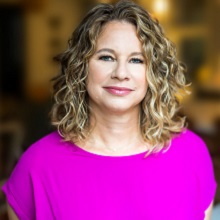
Journalist and author Kristen Green '95 will share the story of enslaved woman Mary Lumpkin as part of UMW's Great Lives Lecture Series on Feb. 8.
Journalist and author Kristen Green ’95 will share the story of enslaved woman Mary Lumpkin as part of UMW’s Great Lives Lecture Series on Feb. 8.

“We know figures like Harriet Tubman, but most enslaved women didn’t try to escape because they wouldn’t have left their children behind,” Kristen said. “Instead, Mary Lumpkin used her agency … to secure an education and freedom for her children, nearly a decade prior to the Civil War.”

Kristen will shed light on Lumpkin’s story – including how she became known as the mother of Virginia Union University, one of the country’s oldest Historically Black Colleges and Universities – on Thursday, Feb. 8, for the William B. Crawley Great Lives Lecture Series. A part of UMW’s 2024 Black History Month Celebration, Mary Lumpkin: Enslaved Woman, Liberator will be held in George Washington Hall’s Dodd Auditorium at 7:30 p.m. Sponsored by LINKBANK, the lecture is open to the public and free of charge and will be posted online shortly after the event.

The lecture reunites Kristen – a member of UMW’s inaugural Alumni of Distinction class – with series founder and Distinguished Professor Emeritus of History William Crawley. She cites him as the reason she chose to attend Mary Washington, after a chance encounter when she was working at her high school job in a furniture store.

“I naturally followed Kristen’s progress with great interest, while she was a student and in her journalism career,” Dr. Crawley said. “I’m so proud of what she has accomplished.”

Kristen said taking courses in history, religion, historic preservation, and English pointed her toward the interdisciplinary American studies major. She also registered for every class with Steve Watkins, who taught journalism at UMW for over two decades.

“I came from a small town and had never encountered anyone like him,” said Kristen, who joined the student newspaper, then called The Bullet. “He encouraged me to question everything.”

With that curiosity, she earned a master’s degree in public administration from the Harvard Kennedy School and wrote for the Boston Globe, San Diego Tribune, and Richmond Times-Dispatch. Covering other communities inspired her to take a closer look at her own hometown.

Her New York Times bestseller, Something Must Be Done About Prince Edward County, investigated how the Virginia community shuttered public schools, rather than admit Black students, after the U.S. Supreme Court’s landmark Brown v. Board of Education decision.

Kristen Green pieced together the story of Mary Lumpkin using letters, court documents, slave manifests, census and city directories, and more, as well as interviews with formerly enslaved people from the early 20th century.

“I had only been told parts of the story,” said Kristen, who explored her own family’s role, learning that her grandfather helped open the segregated private academy that she herself attended as a child. “That’s what my books have become – this history hidden in plain sight.”

That’s what drew her to Mary Lumpkin, who was forced to bear the children of a brutal slave trader, Robert Lumpkin, but used her limited resources to help them have a better life. And Kristen wanted to share the stories of other enslaved women who were exploited during the domestic slave trade.

She used the Library of Virginia and Ancestry.com to trace Mary Lumpkin’s journey through personal correspondence, court documents, wills and deeds, census and city directories, slave manifests, advertisements, news articles, and birth, marriage and death certificates.

“There are so many little records that seem like nothing, but when you put them together, a story starts to form,” said Kristen, who also used recorded interviews with formerly enslaved people from the early 20th century to round out what Mary Lumpkin’s life might have looked like.

Mary Lumpkin saw a different future after Robert died, Kristen said. “She … found freedom, mobility and love and carved out a life of her own.”

A complete lineup of Great Lives lectures, including dates, speakers and sponsors, can be found at umw.edu/greatlives. Learn more about Kristen Green’s work at kristengreen.net. Read more about UMW’s inaugural Alumni of Distinction class.

– Article written by Assistant Director of Advancement Communications Jill Graziano Laiacona ’04