Giving Stories

Philosophical Philanthropy

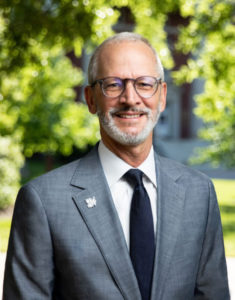
George Van Sant. Photo courtesy of University Archives Centennial Collection.

After serving his country as a Marine Corps officer, Distinguished Professor Emeritus of Philosophy George Van Sant was a dedicated faculty member at Mary Washington for over three decades, earning the Grellet C. Simpson Award for Excellence in Undergraduate Teaching in 1986.

When he passed away in 2013, Professor Van Sant’s own life insurance policy helped fund the Dr. George Van Sant Scholarship, established by friends, colleagues, and former students, led by Marsha Lynn Wilkins ’62, who also set up an endowment for the Department of Classics, Philosophy, and Religion in honor of her late professor.

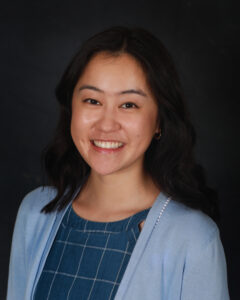
Martina Nicholson '25
Martina Nicholson ’25

“Receiving this scholarship alleviates the financial burden and allows me to concentrate fully on my education,” said Martina Nicholson ’25, a philosophy: pre-law and communication and digital studies major. “Being given the opportunity to learn about the evolution of human thought and progress has further fueled my passion for law and journalism.”

Martina Nicholson has also been the recipient of the Marjorie Jean Frost ’44 and Sylvia McJilton Woodcock ’61 scholarships and the Penelope Ann Parrish Internship in Journalism. She was also named the 2025 recipient of the Grace Mann Launch Award at the annual Eagle Awards ceremony. 

Visit umwheritage.org to learn more about establishing scholarships. For more information about estate planning, visit https://umw.giftlegacy.com/ or contact Executive Director of Gift Planning and Major Gifts Jeremy Vaughn ’08 at jvaughn@umw.edu or 540-654-2063.

-Article written by Assistant Director of Advancement Communications Jill Graziano Laiacona ’04 for the Gift Planning Connections newsletter, Spring 2025
Planning for Peace of Mind

Now is the perfect time to update your will

Unsplash image - hands on a Mac laptop keyboard. As you focus on spring cleaning tasks this season, consider making time for perhaps the most important organization project of all: preparing or updating your last will and testament. Approximately 65% of Americans currently do not have a will, and many pass away every day without having created this critical document to give their surviving family and friends peace of mind.

If you were to pass away today, ask yourself who would inherit your property? Who would care for your minor children until they are mature enough to make sound life and financial decisions? What charities would you want to support and carry forward your legacy?

If you were to pass away without a last will and testament – which is legally known as dying “intestate” – major decisions would be left up to your state of residency. This includes appointing guardians for your children and distributing your assets, potentially causing disharmony among your loved ones. If your family has experienced any important life events since your plan was last updated – such as marriages, divorces, births, deaths, or changes in financial situations – now is the perfect time to make adjustments.

There are significant incentives to clearly outlining your personal wishes, especially regarding child custody, distribution of real estate or assets, planned charitable giving, and passing on your values. A carefully prepared will can also help reduce expenses, estate taxes, and taxes on retirement plans, while minimizing conflicts relating to settling your estate.

You can prepare your will using CresWill, a free, online will-planning tool that guides you through easy-to-understand prompts. Create a valid will that can be downloaded and printed in just minutes, securing your legacy and your family’s future this spring.

For more information about estate planning, visit https://umw.giftlegacy.com/ or contact Executive Director of Gift Planning and Major Gifts Jeremy Vaughn ’08 at jvaughn@umw.edu or 540-654-2063.

-Article written by Assistant Director of Advancement Communications Jill Graziano Laiacona ’04 for the Gift Planning Connections newsletter, Spring 2025

Copyright: 2016, 2023 & 2025 Crescendo Interactive, Inc. Used by permission: TF-2016-011.1-sr, 23KJ14, 24KJ34

Chemistry on the Court

Alumna establishes endowments to support science faculty and women’s tennis

Christy Copper '91 earned a bachelor's degree in chemistry from Mary Washington and a Ph.D. from the University of Tennessee. Now a chemistry professor at the U.S. Naval Academy, she established the Christine L. Copper '91 Endowment for Chemistry Research and the Christine L. Copper '91 Athletic Endowment for Women's Tennis at UMW.
Christy Copper ’91 earned a bachelor’s degree in chemistry from Mary Washington and a Ph.D. from the University of Tennessee. Now a chemistry professor at the U.S. Naval Academy, she established the Christine L. Copper ’91 Endowment for Chemistry Research and the Christine L. Copper ’91 Athletic Endowment for Women’s Tennis at UMW.

When Christy Copper ’91 reflects on her four years at Mary Washington, a few names come to mind.

Ed Hegmann, UMW’s longtime athletic director and women’s tennis coach, taught her about leadership and accountability. Former President William Anderson and wife Jane rooted on her tennis team through two national championship wins. Professor Emeritus of Chemistry Ray Scott helped her secure a research internship that paved the way for graduate school.

“Mary Washington changed my life,” said Christy, who earned a bachelor’s degree in chemistry there before pursuing a Ph.D. at the University of Tennessee. “So many people cared and wanted me to be successful.”

A chemistry professor at the United States Naval Academy, she believes it’s critical that faculty have access to resources, equipment, and professional development so they can teach today’s students. That’s why she established the Christine L. Copper ’91 Endowment for Chemistry Research and the Athletic Endowment for Women’s Tennis at the University of Mary Washington through her estate plan.

“If you can make faculty feel valued and supported, it ensures a better experience for students,” said Christy, citing other influential chemistry professors she had like Bernard Mahoney and John George. “They were always available to help in the lab.”

Hailing from Worcester, Pennsylvania, Christy and her mother found Mary Washington in a college tennis guide and dropped in on Coach Hegmann while touring schools in the southeast. His enthusiasm for the tennis program, along with the regional scholarship Christy earned, quickly won her over.

At Mary Washington, Christy worked hard on the tennis court, becoming the only student-athlete in the school’s history to play on two national championship teams, both as a first-year student and a senior, securing her a spot in UMW’s Athletics Hall of Fame in 2002.

During college, she was recognized as a three-time All-America selection and the most decorated player in Mary Washington’s tennis history. In her four-year career, she held a singles record of 114-30, and was named the NCAA Division III National Senior Player of the Year and Female Scholar-Athlete of the Year in 1991.

Through tennis, she bonded with President Anderson and his wife, who invited Christy and her roommate to live in the guest house on the property of Brompton during her senior year.

“They essentially adopted the team,” said Christy, who recalled mingling with faculty members at parties at their home. “It was very cool to feel like part of their family and tutor and hang out with their children.”

Christy also enjoyed the broad liberal arts and sciences education she found at Mary Washington, taking classes in psychology, geography, and history with professors such as Christopher Kilmartin and the late Marshall Bowen and James Farmer. “It was like story time every evening with Dr. Farmer, hearing about all he had done in his life,” she said.

And she made lifelong friends both on the tennis team and with fellow chemistry majors, while earning top grades and scoring graduate admission to the University of Tennessee. There, she focused on analytical chemistry, a subject she had studied with Professor Scott at Mary Washington.

“It’s about finding a better way to look for a particular chemical in a sample,” Christy said. “In the post-9/11 era, we were looking at poisons in drinks, explosive residue in the environment, and better ways to analyze ink on paper.”

Now in her third decade at the U.S. Naval Academy, where she also serves as the faculty athletics representative, Christy explores human physiology and biochemistry, helping athletes and officers train and perform better.

“I wanted to be at a small school like Mary Washington, engaging in hands-on research with my students,” Christy said. “I hope I can make as much of an impact on them as my professors did on me.”

For more information about estate planning, visit https://umw.giftlegacy.com/ or contact Executive Director of Gift Planning and Major Gifts Jeremy Vaughn ’08 at jvaughn@umw.edu or 540-654-2063.

-Article written by Assistant Director of Advancement Communications Jill Graziano Laiacona ’04 for the Gift Planning Connections newsletter, Spring 2025

Formula for Success

Chemistry scholarship proves to be a defining element in UMW senior’s college career 

Alex Bindon '25 earned the Jacqueline C. Kane Scholarship in Chemistry and is planning a career in analytical chemistry. Photo by Karen Pearlman.
Alex Bindon ’25 earned the Jacqueline C. Kane Scholarship in Chemistry and is planning a career in analytical chemistry. Photo by Karen Pearlman.

Alex Bindon ’25 felt a rush when he received his Experimental Methods exam. His task? Identify a chemical compound by comparing charts, graphs, and spectra from lab instruments.

“It turned out to be glucose,” said Alex, who discovered a passion for analytical chemistry at the University of Mary Washington. “It feels like I’m a detective in an investigation.”

Alex found a fitting formula at UMW, where he earned the Jacqueline C. Kane Scholarship in Chemistry. It was an honor, he said, to receive the award established by the late Irene Piscopo Rodgers ’59 in memory of a chemist friend who passed away in 2014.

“It was tremendously helpful,” said Alex, who has worked hard at Mary Washington but has always appreciated guidance from faculty members. When he struggled with organic chemistry his first semester, he reached out to Professor Janet Asper.

“She said that when fighter pilots take off from aircraft carriers, they drop down before they fly up,” he said. “Then she encouraged me to read the textbook and apply myself so I can take off without flying into the ocean.”

The analogy resonated with Alex, who grew up near the world’s largest naval base in Norfolk, Virginia, and catapulted him to success in college.

His perseverance also helped him land an internship last summer with the Hampton Roads Sanitation District, where he contributed to the purification and treatment of wastewater to keep the bay clean and prevented sewage from entering harbors. He hopes to find a job there after graduation or at a chemical plant in Richmond, Baltimore, or Pittsburgh.

Alex recently connected with Christy Copper ’91, a professor at the U.S. Naval Academy in Annapolis, Maryland, who teaches analytical chemistry. He sought her advice after attending her talk to UMW chemistry majors last fall.

“It’s important to show alumni your true, hard-working self,” he said of Christy and Irene, who established the scholarship that was a catalyst in his college career. “I’m so grateful to those who have supported me so I can take off.”

For more information about estate planning, visit https://umw.giftlegacy.com/ or contact Executive Director of Gift Planning and Major Gifts Jeremy Vaughn ’08 at jvaughn@umw.edu or 540-654-2063.

Article written by Assistant Director of Advancement Communications Jill Graziano Laiacona ’04 for the Gift Planning Connections newsletter, Spring 2025 

Impact Grant Supports Eagles in Recovery’s Substance-Free Mission

When the calendar turns to May, Devin Walsh, the University of Mary Washington’s peer recovery specialist, will mark off some significant milestones.

From left: Ray Tuttle, UMW’s health promotions and student success specialist, and Devin Walsh, UMW's peer recovery specialist, run Eagles in Recovery, a program that supports Mary Washington students working to overcome substance and alcohol addiction. A Fund for Mary Washington Impact Grant has supported Devin's position, which also oversees the recovery coffee bike (seen here), providing beverages, education, and outreach to the campus community. Photo by Parker Michel Boyce.
From left: Ray Tuttle, UMW’s health promotions and student success specialist, and Devin Walsh, UMW’s peer recovery specialist, run Eagles in Recovery, a program that supports Mary Washington students working to overcome substance and alcohol addiction. A Fund for Mary Washington Impact Grant has supported Devin’s position, which also oversees the recovery coffee bike (seen here), providing beverages, education, and outreach to the campus community. Photo by Parker Michel Boyce.

Two years ago, he committed to a life of sobriety, and the following spring, he began training to help others overcome their own struggles with substances and alcohol, which can often make it challenging for college students to stay in school.

“The University wants to give its students the best opportunity to be successful in college and beyond,” Devin said. “Being visible and outspoken about my own journey can give them the hope they need to heal and continue to study, learn, and grow so they can achieve their goals.”

Founded in 2017, UMW’s Eagles in Recovery program has provided the campus with critical resources and tools to support students, from the sober-curious to those who have experienced active addiction. Bolstered by a Fund for Mary Washington Impact Grant and other sources of funding, Eagles in Recovery also educates and engages the campus community through initiatives such as the coffee bike – providing hot beverages, snacks, and outreach – and recovery ally training to teach friends and family how to support loved ones while reducing stigmas surrounding addiction.

“Popular culture has perpetuated the idea that college is the best four-year party one can experience,” said Ray Tuttle, UMW’s health promotions and student success specialist. “But if you’re a person in recovery, and you don’t want to be in that kind of environment, it can be very difficult.”

In 2019, Ray helped secure $50,000 as part of the Expanding Collegiate Recovery in Virginia grant, awarded to several schools across the commonwealth by the Department of Behavioral Health and Development Services. The University used the funds to set up a “clubhouse,” a designated safe space in the Link between Randolph and Mason halls, where students in recovery can spend time together in between classes and on weekends, without the risk of being near addictive substances.

Ray and Jiamie Pyles ’23, UMW’s former peer recovery specialist, also earned a Fund for Mary Washington Impact Grant, which provided $5,000 to support the specialist’s position. Piloted by UMW’s Office of Advancement and Alumni Engagement, the Impact Grant program awarded a total of $25,000 in donor-funded grants last spring, ranging from $1,200 to $5,000, to eight projects or initiatives pitched by students, faculty, and staff on behalf of recognized campus organizations.

Devin, who took over the position last year after serving as a volunteer, provides education and outreach through the recovery coffee bike, which he brings to major events on campus like Devil-Goat Day and Club Carnival. He also administers Narcan training to prevent opiate overdoses and oversees group support meetings and one-on-one coaching in the clubhouse.

At this year's Devil-Goat Day, Ray and Devin served hot beverages from the recovery coffee bike, while providing outreach to the campus community about Eagles in Recovery and its mission. Photo by Parker Michel Boyce.
At this year’s Devil-Goat Day, Ray and Devin served hot beverages from the recovery coffee bike, while providing outreach to the campus community about Eagles in Recovery and its mission. Photo by Parker Michel Boyce.

“You’re talking to someone who has the professional training but also the lived experience of being in active addiction and working on one’s own recovery,” he said.

Devin also organizes substance-free fellowship events like bowling, camping, and trips to amusement parks, sometimes with other schools, and acts as a liaison with Rappahannock Area Community Services Board and various local nonprofits that serve recovery communities.

He plans to attend professional conferences this summer to learn more best practices for his position.

“A peer recovery specialist is still relatively new in the mental health sector, so there’s always new research to stay on top of,” he said. “We also take a multifaced approach, so it’s coming up with a different action plan for each person.”

The program has seen an uptick in students utilizing its services since Devin came to UMW, so both he and Ray are grateful for the Impact Grant, which was critical for the continuation of the program.

“Part of the vision for Eagles in Recovery is supporting students so they don’t have to choose between their recovery and their academics,” Devin said. “They can have both.”

UMW’s Fund for Mary Washington Impact Grants program is made possible through donors’ gifts to the Fund for Mary Washington. These gifts are vital to the University’s ability to improve the student experience and support faculty, providing crucial flexibility to respond to emerging challenges and seize opportunities as they arise. When alumni, parents, friends, faculty, and staff give to the Fund for Mary Washington, they are choosing to be part of a community that is committed to giving back and making the world a better place – enabling students to make positive change through programs like the Fund for Mary Washington Impact Grants.

– Article written by Assistant Director of Advancement Communications Jill Graziano Laiacona ’04