Department of Chemistry and Physics

Mary Washington Physics Alum Wins Huge Award for Study of Tiny Particles

Painting a picture of the quantum realm has long been the mission of Brendan Casey ’92. His quest, which has spanned nearly two decades, won him and his colleagues the 2026 Breakthrough Prize in Fundamental Physics, one of the highest honors in the field.   
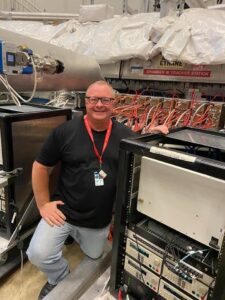
A man wearing a lanyard and smiling, surrounded by equipment for physics research.
Brendan Casey ’92, a senior scientist at Fermilab in Illinois, won the Breakthrough Prize in Fundamental Physics for the final phase in the Muon g-2 experiment. Seen here inside the massive superconducting magnet known as “The Ring,” Brendan’s passion for physics research began at Mary Washington. Photo courtesy of Brendan Casey.

“It’s real Antman kind of stuff,” said Brendan, whose passion for physics research began as an undergraduate at Mary Washington. Now a senior scientist at Fermilab, a particle physics and accelerator laboratory in Illinois, he oversaw a team of 200 scientists who carried out the final phase of the experiment.  

Unlike the Marvel movie, where characters shrink themselves to enter the quantum realm, Brendan and his team made and measured muons – tiny particles that could change our understanding of the universe and the standard model of particle physics. The award they earned this spring places them alongside some of the world’s most renowned physicists, including Stephen Hawking, Jocelyn Bell Burnell, and Kip Thorne.  

“This is one of the greatest collaborations of all time,” Brendan said. The research for the Muon g-2 experiment began nearly 60 years ago at CERN, a lab in Geneva, Switzerland; continued in Brookhaven, Long Island, in the 1990s; and eventually moved to Fermilab. All three facilities were recognized with the Breakthrough Prize for their contributions, sharing the $3 million prize that comes with the award.    
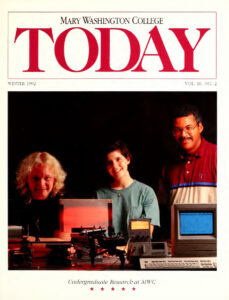
Two students from 1992 along with their professor on the cover of Mary Washington College Today magazine from Winter 1992.
From the cover of Mary Washington College Today, Winter 1992: Brendan Casey ’92 (left) and Andrea Neves ’92 use a laser for fractal research under the guidance of Professor Emeritus George King III. Photo by Lou Cordero and courtesy of UMW Special Collections and University Archives.

Brendan, who grew up in Massapequa, Long Island, learned about Mary Washington from a high school teacher who was from Fredericksburg. When he visited during the spring semester, Ball Circle was buzzing with energy and bodies in motion, as students played frisbee and sunbathed. “It just felt like the right place for me,” he said.  

He planned to study psychology, but a physics class taught by Professor Emeritus Bulent Atalay made him realize what mattered to him.  

“Dr. Atalay covered art, culture, and science, webbing it together into this beautiful story,” Brendan said. “And I interact with people from different countries and disciplines, so having a liberal arts education helps me understand where others are coming from and explain my own perspective.”

He served as class vice president and president and played men’s rugby for his first couple of years of college. During his junior year, however, he was pulled toward research and found his purpose. Soon, he was spending day and night in the lab, exploring particle-wave duality, general relativity, and the curvature of time and space.   

“That launched me toward the career path I’ve been on ever since,” said Brendan, who presented his findings at undergraduate research conferences with his faculty advisor, Professor Emeritus George King III, and won a competition for best paper.  

He then earned a master’s degree at San Francisco State University and a Ph.D. at the University of Hawaii. After post-doctoral research at Brown University, he joined Fermilab, where the team was looking for its next major project.  

“My colleagues and I pushed for muons,” said Brendan, who helped secure funding, develop new technologies, and assemble a group of talented researchers. “My goal is always to be the worst physicist on a team of superstars. And everyone became even better.”  

They needed to be. The experiment involved moving a massive superconducting magnet known as “The Ring” – so large that it occupied four highway lanes – from New York to Illinois. The team studied traffic routes, weather patterns, and even wave heights to transport the technology across state lines.

“It felt like the most challenging escape room ever,” Brendan said. “But time doesn’t run out, and you’re working with the most incredible group of people and celebrating every win together.”  

He plans to build on the momentum with more muon research and a program exploring neutrinos – tiny, neutral particles that have no mass and ignore electrical and magnetic fields. He also hopes to foster future collaboration between Mary Washington and Fermilab. 

“We have spots for undergraduates to do summer research,” he said. “If you want to break the laws of particle physics and answer the most challenging questions in the universe, there’s only a few places in the world where you can do that.”    

Brendan shared his experiences with UMW students – who learn about the Muon g-2 experiment in their introductory physics lab – when he returned to his alma mater for the Research and Creativity Symposium in 2025.  

“We want our students to be aware of the most exciting developments in these fields and emphasize that they can be part of the scientific endeavor,” Assistant Professor of Physics Varun Makhija said. “Hearing about Dr. Casey’s journey showed them the level of scientific contribution that they could be capable of in the future.” 

-Article written by Assistant Director of Advancement Communications Jill Graziano Laiacona ’04 
Chemistry on the Court

Alumna establishes endowments to support science faculty and women’s tennis

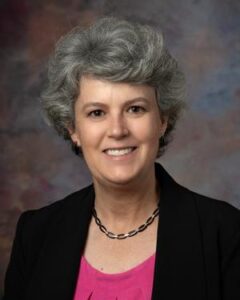
Christy Copper '91 earned a bachelor's degree in chemistry from Mary Washington and a Ph.D. from the University of Tennessee. Now a chemistry professor at the U.S. Naval Academy, she established the Christine L. Copper '91 Endowment for Chemistry Research and the Christine L. Copper '91 Athletic Endowment for Women's Tennis at UMW.
Christy Copper ’91 earned a bachelor’s degree in chemistry from Mary Washington and a Ph.D. from the University of Tennessee. Now a chemistry professor at the U.S. Naval Academy, she established the Christine L. Copper ’91 Endowment for Chemistry Research and the Christine L. Copper ’91 Athletic Endowment for Women’s Tennis at UMW.

When Christy Copper ’91 reflects on her four years at Mary Washington, a few names come to mind.

Ed Hegmann, UMW’s longtime athletic director and women’s tennis coach, taught her about leadership and accountability. Former President William Anderson and wife Jane rooted on her tennis team through two national championship wins. Professor Emeritus of Chemistry Ray Scott helped her secure a research internship that paved the way for graduate school.

“Mary Washington changed my life,” said Christy, who earned a bachelor’s degree in chemistry there before pursuing a Ph.D. at the University of Tennessee. “So many people cared and wanted me to be successful.”

A chemistry professor at the United States Naval Academy, she believes it’s critical that faculty have access to resources, equipment, and professional development so they can teach today’s students. That’s why she established the Christine L. Copper ’91 Endowment for Chemistry Research and the Athletic Endowment for Women’s Tennis at the University of Mary Washington through her estate plan.

“If you can make faculty feel valued and supported, it ensures a better experience for students,” said Christy, citing other influential chemistry professors she had like Bernard Mahoney and John George. “They were always available to help in the lab.”

Hailing from Worcester, Pennsylvania, Christy and her mother found Mary Washington in a college tennis guide and dropped in on Coach Hegmann while touring schools in the southeast. His enthusiasm for the tennis program, along with the regional scholarship Christy earned, quickly won her over.

At Mary Washington, Christy worked hard on the tennis court, becoming the only student-athlete in the school’s history to play on two national championship teams, both as a first-year student and a senior, securing her a spot in UMW’s Athletics Hall of Fame in 2002.

During college, she was recognized as a three-time All-America selection and the most decorated player in Mary Washington’s tennis history. In her four-year career, she held a singles record of 114-30, and was named the NCAA Division III National Senior Player of the Year and Female Scholar-Athlete of the Year in 1991.

Through tennis, she bonded with President Anderson and his wife, who invited Christy and her roommate to live in the guest house on the property of Brompton during her senior year.

“They essentially adopted the team,” said Christy, who recalled mingling with faculty members at parties at their home. “It was very cool to feel like part of their family and tutor and hang out with their children.”

Christy also enjoyed the broad liberal arts and sciences education she found at Mary Washington, taking classes in psychology, geography, and history with professors such as Christopher Kilmartin and the late Marshall Bowen and James Farmer. “It was like story time every evening with Dr. Farmer, hearing about all he had done in his life,” she said.

And she made lifelong friends both on the tennis team and with fellow chemistry majors, while earning top grades and scoring graduate admission to the University of Tennessee. There, she focused on analytical chemistry, a subject she had studied with Professor Scott at Mary Washington.

“It’s about finding a better way to look for a particular chemical in a sample,” Christy said. “In the post-9/11 era, we were looking at poisons in drinks, explosive residue in the environment, and better ways to analyze ink on paper.”

Now in her third decade at the U.S. Naval Academy, where she also serves as the faculty athletics representative, Christy explores human physiology and biochemistry, helping athletes and officers train and perform better.

“I wanted to be at a small school like Mary Washington, engaging in hands-on research with my students,” Christy said. “I hope I can make as much of an impact on them as my professors did on me.”

For more information about estate planning, visit https://umw.giftlegacy.com/ or contact Executive Director of Gift Planning and Major Gifts Jeremy Vaughn ’08 at jvaughn@umw.edu or 540-654-2063.

-Article written by Assistant Director of Advancement Communications Jill Graziano Laiacona ’04 for the Gift Planning Connections newsletter, Spring 2025

Formula for Success

Chemistry scholarship proves to be a defining element in UMW senior’s college career 

Alex Bindon '25 earned the Jacqueline C. Kane Scholarship in Chemistry and is planning a career in analytical chemistry. Photo by Karen Pearlman.
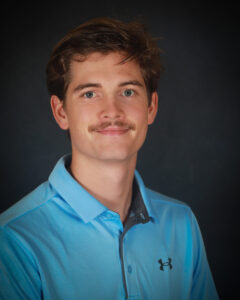
Alex Bindon ’25 earned the Jacqueline C. Kane Scholarship in Chemistry and is planning a career in analytical chemistry. Photo by Karen Pearlman.

Alex Bindon ’25 felt a rush when he received his Experimental Methods exam. His task? Identify a chemical compound by comparing charts, graphs, and spectra from lab instruments.

“It turned out to be glucose,” said Alex, who discovered a passion for analytical chemistry at the University of Mary Washington. “It feels like I’m a detective in an investigation.”

Alex found a fitting formula at UMW, where he earned the Jacqueline C. Kane Scholarship in Chemistry. It was an honor, he said, to receive the award established by the late Irene Piscopo Rodgers ’59 in memory of a chemist friend who passed away in 2014.

“It was tremendously helpful,” said Alex, who has worked hard at Mary Washington but has always appreciated guidance from faculty members. When he struggled with organic chemistry his first semester, he reached out to Professor Janet Asper.

“She said that when fighter pilots take off from aircraft carriers, they drop down before they fly up,” he said. “Then she encouraged me to read the textbook and apply myself so I can take off without flying into the ocean.”

The analogy resonated with Alex, who grew up near the world’s largest naval base in Norfolk, Virginia, and catapulted him to success in college.

His perseverance also helped him land an internship last summer with the Hampton Roads Sanitation District, where he contributed to the purification and treatment of wastewater to keep the bay clean and prevented sewage from entering harbors. He hopes to find a job there after graduation or at a chemical plant in Richmond, Baltimore, or Pittsburgh.

Alex recently connected with Christy Copper ’91, a professor at the U.S. Naval Academy in Annapolis, Maryland, who teaches analytical chemistry. He sought her advice after attending her talk to UMW chemistry majors last fall.

“It’s important to show alumni your true, hard-working self,” he said of Christy and Irene, who established the scholarship that was a catalyst in his college career. “I’m so grateful to those who have supported me so I can take off.”

For more information about estate planning, visit https://umw.giftlegacy.com/ or contact Executive Director of Gift Planning and Major Gifts Jeremy Vaughn ’08 at jvaughn@umw.edu or 540-654-2063.

– Article written by Assistant Director of Advancement Communications Jill Graziano Laiacona ’04 for the Gift Planning Connections newsletter, Spring 2025 

Blazing a Trail: Scholarships Help UMW Chemistry Major Find His Purpose

Sean McGavin’s college journey has taken him along diverse and far-reaching paths – hiking the Appalachian Trail, traversing the wilds of Montana, and crossing the ocean to the Galápagos Islands. But the UMW senior knows his path wouldn’t have been possible without the University of Mary Washington.

“I want to make the world a better place,” Sean said. While majoring in chemistry, he has served as a wildland firefighter and plans to use his science background to develop more environmentally safe ways of extinguishing the flames. “I didn’t know my purpose before coming to Mary Washington, but I found it here.”

Sean shared his story at UMW’s Celebration of Giving in November, when he told a room full of donors – including his own benefactor – how the Sally Brannan Hurt ’92 Study Abroad Scholarship gave him the chance to visit one of the most biodiverse places on the planet. Numerous students have witnessed the flora and fauna found on the tiny archipelago off the coast of Ecuador because of Sally’s generosity to her alma mater.

“Getting to experience a global ecological treasure like the Galápagos Islands inspires students like nothing else,” said Professor of Biological Sciences Andrew Dolby, who conducts the faculty-led trip for students and guided the UMW Alumni on the Road excursion that influenced Sally to establish her scholarship. “She opens up the world for students who would not be able to travel internationally without her support.”

That’s true for Sean, who didn’t feel ready for college after graduating from high school in Alexandria, Virginia. Instead, he spent part of a gap year hiking the Appalachian Trail from Georgia to Maine, while he figured out his next steps. “It made me realize how much I wanted a life and a job where I could work with birds above my head and bugs crawling across my boot.”

After his 2,200-mile trek, Sean applied to Mary Washington, calling it “close enough to home, but far enough away to spread my wings.”

He decided to major in chemistry after a course with adjunct instructor Caleb Strepka and appreciated the support he found from faculty members like Sarah Smith ’12, Leanna Giancarlo, and Davis Oldham. “They taught me how to be expressive and creative in how I tackled problems, even in the lab.”

Outside of class, he joined UMW’s Ultimate Frisbee team, bonding with one of the captains, a former wildland firefighter. Sean has spent the last three summers doing just that in Montana, learning all he can to protect the trees, plants, and wildlife that dwell there.

“I realized that it was a career path where I could help people and take care of forests, which have given me such a sense of peace in my life,” said Sean, citing fires that have wiped out acres in Hawaii and Greece, and most recently, Southern California. “Wildland firefighting requires a deep understanding of ecological systems and diverse environments.”

He gained that from the Galápagos trip, where he planted trees and observed the giant tortoises and the marine iguanas that had fascinated him since childhood.

But even more important was learning about the islands’ preservation efforts.

“The chemicals currently being used to combat fires can often suffocate birds and animals and raise heavy metal levels in fish,” Sean said. After graduating from Mary Washington, he plans to pursue a Ph.D. in chemistry so he can develop a wildlife-safe fire retardant that can be used in many different environments.

“The chemistry department, the Frisbee team, and the opportunities that Sally has provided have made me who I am and have given me the support to achieve my dreams of saving the forests that gave me so much joy as a child,” Sean said. “This wouldn’t have been possible for me without her scholarship, and I’ll never forget that.”

Learn more about establishing scholarships and how private support makes a difference in the lives of UMW students who receive scholarships, research fellowships, and internship grants.

Read more about the next UMW Alumni on the Road trip to the Galápagos Islands now booking for June 2025. 

– Article written by Assistant Director of Advancement Communications Jill Graziano Laiacona ’04 

Summer Science Students Earn Perkins Research Awards

As temperatures soared near triple digits last Wednesday, the weather formed a compelling case for Ava Spencer’s research on how extreme heat impacts Fredericksburg’s most marginalized communities.

“I wanted to look at these issues from a sociological perspective, in a way that could help people,” said Ava, a rising senior majoring in environmental science at the University of Mary Washington.

She was one of a pair of students who took home the top prizes at UMW’s Summer Science Institute (SSI), which engages undergraduates in an intense 10-week research experience with professors and peers. At a public symposium held in the Hurley Convergence Center’s Digital Auditorium, she and physics major Kevin Leong were chosen by a panel of faculty judges to each receive a scholarship award through the John C. and Jerri Barden Perkins ’61 College of Arts and Sciences Student Research Endowment. The funds will help the students continue their projects through the upcoming school year.

Second place winners were Curtis Kasiski for his research on determining the dietary diversity of bumblebees, and Orianne Mbuyi Mujinga Kazadi for her work identifying fungal strains that can destroy invasive spotted lanternflies.

“I hope this award inspires them to open their minds to possibilities in life,” said Dr. Jerri Barden Perkins, who watched the presentations via Zoom. She was amazed at the variety and relevance of topics, she says, from fighting antibiotic resistance with phage therapy to using sockets to create video games. “The liberal arts and sciences education students find at Mary Washington broadens their perspectives and prepares them for the real world.”

Dr. Perkins earned a bachelor’s degree in chemistry at Mary Washington and a M.D. from the Medical College of Virginia. She went on to conduct her own trailblazing research into rheumatoid arthritis and approved one of the first FDA drug therapies to combat AIDS. Her endowment, one of several she established at UMW, is in honor of her late husband, Cal, who practiced internal medicine.

“The Perkins scholarship award will allow us to recognize UMW students demonstrating exemplary performance,” said College of Arts and Sciences Dean Keith Mellinger. “This elevates SSI to a professional level.”

Kevin, a rising senior, received the “Best Poster” award for his creation of a solar-powered cell phone charging station for homeless people. Working with Assistant Professor of Physics Desmond Villalba, he used a 3-D printer, and created and programmed circuits, to assemble a functioning prototype he hopes can be replicated in Fredericksburg.

“I feel so honored to have won the Perkins award,” said Kevin, adding that SSI has inspired him to pursue a career or further education in research. “The entire experience has been fantastic.”

Ava, who won the “Best Presentation” award, collaborated with Assistant Professor of Environmental Science Pamela Grothe ’06 and a team of volunteers to map temperatures across Fredericksburg.

They discovered that some neighborhoods historically zoned for African Americans were up to five degrees warmer than others due to lack of tree canopy and green spaces. “Research like this has been performed in larger cities, but not smaller communities like ours,” Ava said.

Receiving the Perkins award, she said, will help her continue the research through the fall semester. She hopes her findings will eventually aid local officials with the city’s climate action plan. “It’s a great feeling to be recognized for a project you’ve poured your time, energy and love into.”

For information on endowing scholarships at the University of Mary Washington, please contact the Office of University Advancement at advance@umw.edu or 540-654-1024.

– Article written by Assistant Director of Advancement Communications Jill Graziano Laiacona ’04