Irene Piscopo Rodgers

UMW Students Win Prestigious Perkins Awards at Summer Science Symposium

Cold bottled water can be refreshing on a hot day, but hydration might not be its only effect. A chemical called DEHP can leach from plastic into drinking water, combining with bodily enzymes to form small molecules called metabolites.
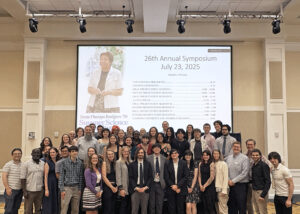
Participants of the Irene Piscopo Rodgers '59 Summer Science Institute pose for a photo with their faculty mentors after the symposium held on July 23 in the Cedric Rucker University Center's Chandler Ballroom. Photo courtesy of Betsy Lewis/College of Arts and Sciences.
Participants of the Irene Piscopo Rodgers ’59 Summer Science Institute pose for a photo with their faculty mentors after the symposium held on July 23 in the Cedric Rucker University Center’s Chandler Ballroom. Photo courtesy of Betsy Lewis/College of Arts and Sciences.

“Research into their health effects is lacking,” said University of Mary Washington chemistry major Lily Gruss ’27, so she and Professor of Chemistry Davis Oldham spent the summer synthesizing them in a Jepson Science Center lab. “It will make it easier to isolate and study them.”

Lily, along with environmental science and biology major Joey Gasink ’26, presented research that placed first at Mary Washington’s Irene Piscopo Rodgers ’59 Summer Science Institute (SSI). Both earned awards through the John C. and Jerri Barden Perkins ’61 College of Arts and Sciences Student Research Endowment, which will support their future studies and fund other high-impact learning opportunities – such as attending academic conferences – that are an integral part of the UMW experience.

The 10-week SSI program, now in its 26th year, gives undergraduate students the chance to engage in intensive research with their professors and peers. Thirty participants spanning STEM-related disciplines – biology, chemistry, computer science, Earth and environmental science, physics, mathematics, and geography – shared their findings at a symposium last month at the Cedric Rucker University Center.

“I was struck by not only the depth of the students’ research but by their eloquence and passion,” said Dr. Jerri Barden Perkins ’61, who watched the presentations via Zoom. “Knowing that these awards will support their journeys is deeply rewarding.”

Dr. Perkins, who has established six scholarships and fellowships at her alma mater, earned a bachelor’s degree in chemistry from Mary Washington and a medical degree from the Medical College of Virginia. She conducted groundbreaking research on rheumatoid arthritis at the National Institutes of Health and reviewed data at the U.S. Food and Drug Administration to protect patients in clinical trials.

Introduced in 1999 and supported by a DuPont grant, SSI has given over 500 UMW students the opportunity to conduct hands-on research with their faculty mentors on campus and in the field. Last year, the Institute was named to honor Irene Piscopo Rodgers ’59, whose $36 million estate gift – the largest in University history – established full-ride scholarships for out-of-state students. It also created the Piscopo Rodgers Science Fellows Program, a competitive funding opportunity available to Mary Washington students starting this fall.

“Without the generous support of Dr. Perkins and Mrs. Rodgers, I wouldn’t have become the researcher I am today,” said Joey, who studied freshwater snails exposed to environmental contaminants and extreme heat to understand how other living organisms might be affected.

Environmental science major Summer Orledge ’26 took second place for her research on pollutants collected near an Indian reservation in eastern Virginia.

“It’s rare for students to engage in this level of research as undergraduates,” said Summer, who honed skills in field sampling and processing, instrumentation, statistical analysis, writing, and more. “It was labor intensive but prepared me well for graduate school.”

Fellow runner-up Eric Torres ’26, also an environmental science major, analyzed neurotoxic trace metals found along riverbanks in Central Appalachia, a region that has seen increased rates of cancer and other serious illnesses. He found it beneficial to hear from past SSI participants Kristen Lewis Lawson ’12, Ryan Meek ’23, Maddie Killian ’23, and Adrian Coello ’24, who shared their experiences during a luncheon at the symposium.

“Seeing alumni in medical and graduate school and those already practicing careers in medicine who were in the same program helped instill the confidence that this was a sustainable future for me,” said Eric, who plans to pursue a Ph.D. “I want to thank donors for supporting a program that gives budding scientists a tremendous opportunity to engage in meaningful research.”

Learn more about the Irene Piscopo Rodgers ’59 Summer Science Institute and support UMW’s College of Arts and Sciences.

Article by Assistant Director of Advancement Communications Jill Graziano Laiacona ’04 
Formula for Success

Chemistry scholarship proves to be a defining element in UMW senior’s college career 

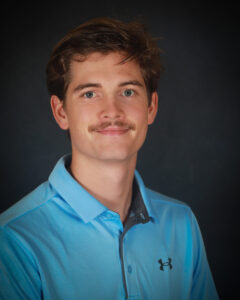
Alex Bindon '25 earned the Jacqueline C. Kane Scholarship in Chemistry and is planning a career in analytical chemistry. Photo by Karen Pearlman.
Alex Bindon ’25 earned the Jacqueline C. Kane Scholarship in Chemistry and is planning a career in analytical chemistry. Photo by Karen Pearlman.

Alex Bindon ’25 felt a rush when he received his Experimental Methods exam. His task? Identify a chemical compound by comparing charts, graphs, and spectra from lab instruments.

“It turned out to be glucose,” said Alex, who discovered a passion for analytical chemistry at the University of Mary Washington. “It feels like I’m a detective in an investigation.”

Alex found a fitting formula at UMW, where he earned the Jacqueline C. Kane Scholarship in Chemistry. It was an honor, he said, to receive the award established by the late Irene Piscopo Rodgers ’59 in memory of a chemist friend who passed away in 2014.

“It was tremendously helpful,” said Alex, who has worked hard at Mary Washington but has always appreciated guidance from faculty members. When he struggled with organic chemistry his first semester, he reached out to Professor Janet Asper.

“She said that when fighter pilots take off from aircraft carriers, they drop down before they fly up,” he said. “Then she encouraged me to read the textbook and apply myself so I can take off without flying into the ocean.”

The analogy resonated with Alex, who grew up near the world’s largest naval base in Norfolk, Virginia, and catapulted him to success in college.

His perseverance also helped him land an internship last summer with the Hampton Roads Sanitation District, where he contributed to the purification and treatment of wastewater to keep the bay clean and prevented sewage from entering harbors. He hopes to find a job there after graduation or at a chemical plant in Richmond, Baltimore, or Pittsburgh.

Alex recently connected with Christy Copper ’91, a professor at the U.S. Naval Academy in Annapolis, Maryland, who teaches analytical chemistry. He sought her advice after attending her talk to UMW chemistry majors last fall.

“It’s important to show alumni your true, hard-working self,” he said of Christy and Irene, who established the scholarship that was a catalyst in his college career. “I’m so grateful to those who have supported me so I can take off.”

For more information about estate planning, visit https://umw.giftlegacy.com/ or contact Executive Director of Gift Planning and Major Gifts Jeremy Vaughn ’08 at jvaughn@umw.edu or 540-654-2063.

Article written by Assistant Director of Advancement Communications Jill Graziano Laiacona ’04 for the Gift Planning Connections newsletter, Spring 2025 

UMW Students Earn Perkins Awards at Summer Science Institute Symposium

One of senior Kate Green’s favorite activities this summer was wading in the Potomac and Rappahannock rivers. Swimming in the cool, chin-deep waters, she collected specimens to study how parasites differently impact male and female freshwater snails.

“From biodiversity to human recreation, aquatic ecosystems play an important role in the lives of many different species,” said Kate, a University of Mary Washington conservation biology major, who pursued a completely novel research topic this summer. “My studies will help us obtain a fuller picture of how healthy our beloved rivers are.”

Kate was one of two students who took home the top prizes this year during UMW’s 25th annual Summer Science Institute (SSI), which engages undergraduate STEM students in a 10-week intensive research experience alongside their professors and peers. At a public symposium held July 24 in UMW’s Hurley Convergence Center, Green and her lab partner, biology major Morgan Hicok ’25, earned scholarship awards through the John C. and Jerri Barden Perkins ’61 College of Arts and Sciences Student Research Endowment. The funds will help them continue their research during the upcoming academic year.

Earth and environmental sciences major Joseph Gasink ’26 took second place, evaluating the impact of trace metals on invertebrates in a tidal marsh near a former coal-tar creosote plant. Joining him as runner-up was physics major Boone Fleenor ’26, who hypothesized that drones might be an effective tool to improve water circulation. They will also receive funding through Dr. Perkins’ endowment.

“I appreciate the role SSI plays in advancing student hands-on research so they can understand our world, gain valuable experience, develop critical thinking skills, and ignite their passion for science,” Dr. Jerri Barden Perkins ’61 said. “These inspired minds will shape the future with groundbreaking discoveries, improve healthcare, and address global challenges.”

Dr. Perkins earned a bachelor’s degree in chemistry at Mary Washington and a medical degree from the Medical College of Virginia. She conducted groundbreaking research on rheumatoid arthritis at the National Institutes of Health and reviewed clinical data at the U.S. Food and Drug Administration to protect patients in clinical trials.

“As a woman entering the scientific field, I find Dr. Perkins incredibly inspirational,” said Kate, also praising the late Irene Piscopo Rodgers ’59, who left UMW a transformational $30 million estate gift for scholarships and undergraduate scientific research. The University named the program for Rodgers in a ceremony on Wednesday. “I’d like to wholeheartedly thank both donors for their contributions to UMW and undergraduate STEM students, as well as to the growth of SSI.”

Morgan, who worked alongside Green and Associate Professor of Biological Sciences Abbie Tomba, researched how parasites called trematodes can affect freshwater snails and their ability to fight against a current in aquatic ecosystems.

“Climate change is beginning to affect water levels and flow due to extreme weather,” said Morgan, who will use the Perkins award to continue experimentation and hopes to eventually attend graduate school. “This experience has helped guide my aspirations and my passion for research.”

SSI has grown exponentially throughout the past quarter century, with more than 500 students engaging in the program since its inception. Alumni participants in the program recently returned to campus for a luncheon that connected them with current scholars, faculty mentors, and industry professionals.

Professor Emeritus of Chemistry Ray Scott, who attended the symposium, secured the original grant from DuPont, which helped launch the program. Funding from generous donors, as well as the Naval Surface Warfare Center, Dahlgren Division, has helped this year’s SSI participants engage in extensive research on a broad range of topics across disciplines.

Thirty students shared their findings through oral and poster presentations during Wednesday’s symposium. In labs and in the field, they discovered solutions to real-world issues, exploring breast cancer cell proliferation, electron dynamics, demographic shifts, myotonic dystrophy, decaying dark matter, how toxic pollutants affect the dopamine system, and more.

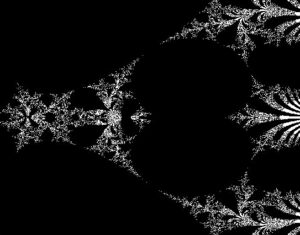
Benjamin Plonka '27 and Sophie Jensen '27 created intricate fractal patterns in their investigation of tetration, or repeated exponentiation. Photo courtesy of Benjamin Plonka.
Benjamin Plonka ’27 and Sophie Jensen ’27 created intricate fractal patterns in their investigation of tetration, or repeated exponentiation. Photo courtesy of Benjamin Plonka.

But mathematics major Benjamin Plonka ’27 said he pursued his project purely because of his passion. He and research partner Sophie Jensen ’27 investigated the concept of tetration, or repeated exponentiation, and visualized its behavior on a real and complex plane to see what intricate structures it can create.

“If we only study the world through the lenses of how it can serve us,” Benjamin said, “we deprive ourselves of seeing some pretty amazing things.”

Learn more about the College of Arts and Sciences’ Irene Piscopo Rodgers ’59 Summer Science Institute.

– Article by Assistant Director of Advancement Communications Jill Graziano Laiacona ’04


UMW’s Summer Science Institute Naming Honors Irene Piscopo Rodgers ’59

The University of Mary Washington’s Summer Science Institute (SSI) has given UMW students the chance to conduct trailblazing undergraduate STEM research – analyzing cancer cells, carbon dioxide reduction, and complex computer coding – for a quarter of a century.

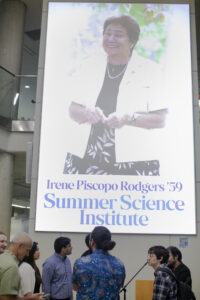
UMW named its 10-week undergraduate STEM research program the Irene Piscopo Rodgers '59 Summer Science Institute at a ceremony in the Hurley Convergence Center lobby during SSI's annual symposium on Wednesday. The late donor left her alma mater a transformational $30 million estate gift for undergraduate scientific research and scholarships. Photo by Karen Pearlman.
UMW named its 10-week undergraduate STEM research program the Irene Piscopo Rodgers ’59 Summer Science Institute at a ceremony in the Hurley Convergence Center lobby during SSI’s annual symposium on Wednesday. The late donor left her alma mater a transformational $30 million estate gift for undergraduate scientific research and scholarships. Photo by Karen Pearlman.

Many of these young scientists had access to their summer studies because of the scholarships, research fellowships, and scientific presentation grants funded by Irene Piscopo Rodgers ’59. UMW named the program the Irene Piscopo Rodgers ’59 Summer Science Institute at a ceremony in the Hurley Convergence Center lobby during SSI’s annual symposium on Wednesday.

“Irene had a long history of supporting STEM majors in pursuing their passion through research,” said College of Arts and Sciences Dean Keith Mellinger, who outlined the history of SSI and recognized the more than 500 students who have participated in research with UMW faculty since its inception. The transformational $30 million estate gift she left the University has resulted in noticeable growth for the program, especially in the last couple of years, he said, from 14 students in the late 1990s to 30 students this summer. “And this trajectory will continue. More faculty, more students, more projects, more lives changed.”

Before Board of Visitors Rector Devon Williams Cushman ’93 read the board resolution, Dean Mellinger thanked Professor Emeritus of Chemistry Ray Scott, who attended the ceremony, for securing the original grant from DuPont and launching SSI. “The program has a history of setting students up for success in graduate and professional study, as well as a seamless entry into any number of careers,” Dean Mellinger said.

Since 1999, SSI’s 10-week program has offered undergraduate students the opportunity to work closely alongside their professors and peers, now in the areas of biology, chemistry, physics, computer science, mathematics, and Earth and environmental science. Funding from generous donors, as well as the Naval Surface Warfare Center, Dahlgren Division, has helped these students engage in extensive research on a broad range of topics across disciplines.

At the symposium, participants summarized their findings through oral presentations and poster sessions, providing solutions for real-world concerns such as preventing breast cancer cell proliferation and exploring how environmental pollutants impact aquatic life. Other projects delved into dark matter, studied skeletal muscle function, explored how to make computers more efficient, and mined data to understand nationwide teaching shortages and demographic changes over time.

Morgan Hicok ’25 and Kate Green ’25, who both studied freshwater snails, earned top prizes. Joseph Gasink ’26, who researched the impact of trace metals on aquatic life, and Boone Fleenor ’26, who studied how drones can impact water circulation, were selected as runners-up. All received awards through the John C. and Jerri Barden Perkins ’61 College of Arts and Sciences Student Research Endowment, which provides funding for them to continue their studies during the academic year.

Dr. Jerri Barden Perkins earned a bachelor’s degree in chemistry at Mary Washington and a medical degree from the Medical College of Virginia. She conducted groundbreaking research on rheumatoid arthritis at the National Institutes of Health and reviewed clinical data at the U.S. Food and Drug Administration to protect patients in clinical trials.

“We’re so grateful to both of these women, Dr. Perkins and Irene, for their extraordinary philanthropy and dedication to advancing scientific education and research,” said Vice President for Advancement and Alumni Engagement Katie Turcotte. “Their stories of being women in male-dominated fields and overcoming obstacles to find success have and will continue to profoundly inspire our undergraduate students and faculty in their own pursuit of scientific knowledge.”

Irene Piscopo Rodgers earned a bachelor’s degree in chemistry from Mary Washington, followed by a master’s degree in chemistry from the University of Michigan. She became a revered electron microscopist, working at the American Cyanamid Company and Philips Electronic Instruments.

As one of the few women her profession, she helped pave the way for current UMW students, especially women, to excel in STEM subjects of their own choosing. To date, more than 100 students have benefited from her generosity. In 2004, Irene donated a transmission electron microscope to UMW, teaching students and faculty how to use it. A decade later, the University awarded her an honorary Doctor of Humane Letters degree for her service and contributions to the institution. Her estate gift also helped establish four new full-ride Alvey Scholarships for out-of-state students, in addition to eight she created during her lifetime.

Learn more about the College of Arts and Sciences’ Irene Piscopo Rodgers ’59 Summer Science Institute.  

– Article by Assistant Director of Advancement Communications Jill Graziano Laiacona ’04

Lessons in Sciences: Mary Washington Alumnae Advance STEM Careers

A young woman leaves New York to earn a bachelor’s degree in chemistry at a small Virginia women’s college in the 1950s. After graduate school, she becomes a revered electron microscopist – but not without the challenges of being a woman in a male-dominated field. Consequently, she spends her life helping female students at her alma mater advance their own careers and pursue their scientific passions.

It sounds like Lessons in Chemistry, the popular Apple+ miniseries based on the novel by Bonnie Garmus, chronicling the life of a female chemist challenging the status quo in the mid-20th century.

Yet, it’s the true story of Irene Piscopo Rodgers ’59. She and other Mary Washington alumnae – such as Anne Hope Scott ’59, Jerri Barden Perkins ’61, and Marilyn Shull Black ’69 – made scientific breakthroughs while breaking through the glass ceiling.

“These women overcame obstacles at a time when there were few women in STEM and found success in their fields,” said Vice President for Advancement and Alumni Engagement Katie Turcotte. “We are so thankful to them and others who continue to invest in their alma mater so that students today can achieve their goals, just as they did.”

On Feb. 11’s International Day of Women and Girls in Science, UMW recognizes alumnae who have established or contributed toward scholarships and other awards in the sciences. A total of 21 graduates have given $10,000 or more to STEM areas over the years, all of them women. Nearly $43 million has been made in gifts and pledges to designations in the sciences by alumni, friends, and families, mostly in the last decade. 

Irene left the University of Mary Washington a transformational $30 million gift – the largest in the institution’s history – when she passed away in 2022. Her generous bequest will exponentially grow UMW’s undergraduate scientific research program and create four new Alvey Scholarships, providing full tuition, fees, and room and board for out-of-state students, adding to the eight she created in her lifetime.

The first of these four new scholarships will be awarded this spring to an incoming first-year student who wishes to pursue studies in biology, chemistry, physics, Earth and environmental science, mathematics, or computer science. Recipients will be notified by April 1, 2024, and students are encouraged to apply for admission as the first step. UMW also offers in-state full-ride scholarships for Virginia students, with more than 90 majors, minors, and programs to choose from.

Current students can apply for scholarships now, with the application open Feb. 1 through May 15.

In addition, the University recently recognized a decades-long commitment by Anne Hope Scott, who made a provision in her estate plan in 1988 to fund the Anne Hope Scott ’59 Scholarship in Chemistry. A former teacher, Anne, who also passed away in 2022, spent 34 years as a chemist and consumer safety officer with the U.S. Food and Drug Administration (FDA).

Irene had often said that Mary Washington had “opened worlds” for her, so she wanted to do the same for students like senior Sofia Taylor, an Alvey Scholarship recipient with whom she corresponded regularly through cards and letters.

Sofia had the opportunity to thank her late donor one last time in a video that premiered at UMW’s annual Celebration of Giving dinner in December.

“I hope you know that everything I’m doing here at UMW was made possible because of your generosity,” said Sofia, a psychology major and music and neuroscience minor. “I will continue to make you proud as a woman in STEM and sing your praises for all past and future Alvey Scholars to hear.”

With a storied career as a chemist, physician, researcher, and author, Jerri Barden Perkins, MD, credits her start to the $100 scholarship she received at Mary Washington when she was a student. “This is my way of paying it forward for future generations.”

She was also honored in the video by one of her recipients, Harrison Miles ’15, ’23, who returned to UMW to earn a post-baccalaureate degree in conservation biology. Harrison was awarded the John C. and Jerri Barden Perkins ’61 College of Arts and Sciences Student Research Fellowship at last year’s Summer Science Institute for his research using fungus extracted from the invasive spotted lantern fly.

“Without the scientific background and support of my Mary Washington professors, I could not have achieved my goals,” said Jerri, who faced gender bias in medical school and throughout her career. She later trained at the National Institutes of Health, where she made groundbreaking discoveries into rheumatoid arthritis, and worked at the FDA, where she recommended the first therapy to treat AIDS patients.

Docia Atanda ’23, also featured in the video, said that receiving the Bernard L. Mahoney Jr. Student Research Fellowship from Marilyn Shull Black meant that she could continue her research with Assistant Professor of Chemistry Sarah Smith ’12. Docia and Dr. Smith also received awards from Irene when they were students.

Now pursuing a Ph.D. in chemistry at the University of Maryland, Docia said she hopes to use her science education to contribute to the greater good just like Marilyn, who spent her career studying indoor air quality and its impact on children’s health.

“Dr. Black, thank you for believing in the power of education and investing in students like me,” Docia said. “Your support has changed my life and enabled me and other Mary Washington students to pursue our dreams and make a difference in the world.”

Find scholarship opportunities that are available to UMW students. Learn more about establishing scholarships and how private support makes a difference in the lives of UMW students who receive scholarships, research fellowships, and internship grants.

-Article written by Associate Director of Advancement Communications Jill Graziano Laiacona ’04 

Watch the ‘Impact of Giving on the Sciences’ video: