Uncategorized

Honoring a Master

Privately funded faculty award for English professors recognizes the value of extraordinary teaching.
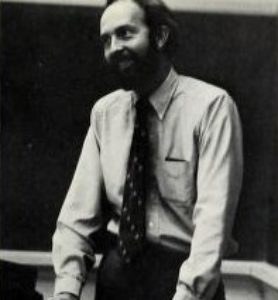
Donald E. Glover as pictured in the 1971 edition of The Battlefield.

In 1971, the average cost of a postage stamp was 8 cents; Walt Disney World opened in Orlando, Florida; and Intel released its first microprocessor. In Fredericksburg, Virginia, a Mary Washington English professor made an indelible impression on a member of the Class of 1971.

Fifty years later, that alumna has fully funded a new faculty award to honor the memory of Distinguished Professor Emeritus of English Donald E. Glover. During his tenure, Dr. Glover was a widely respected and beloved member of the faculty. He began teaching at Mary Washington in 1961 and served as department chair from 1970-73. Glover retired in 1998 after 37 years of service; he passed away in August of 2020.

While the donor still wishes to remain anonymous, she first alerted the University in 2018 of her intentions as defined in her estate plans. She then requested that Glover be informed so he would know how important his teaching had been to her during those formative years at Mary Washington.

Dr. Gary Richards, professor and chair of the Department of English and Linguistics, met with Glover in 2018 to share news of this faculty award, as well as the future creation of a named endowed scholarship.
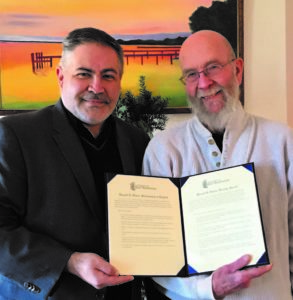
In 2018, Dr. Gary Richards (left) met Dr. Donald E. Glover (right) and shared news of two special gifts from a former English student.

“Don was long retired when I became Chair,” says Richards, “but this award brought me in contact with him and his lovely wife, Alice. Even though he was already struggling with his health then, I got a glimpse of the professor who made such an impact on our donor. I am delighted that Don Glover is being honored in this way.”

The donor recalls that Glover was light on lectures, yet strategically led his students to understand and appreciate works of literature by asking questions to stimulate critical thinking and discussion. She says students learned for themselves as they came to realize the full meaning and importance of what they had read. She decided to go ahead and fund this award now in the hope that English faculty can follow in Glover’s footsteps, while having a positive and lasting impact on students’ lives.

Richards says the award’s focus on teaching acknowledges Glover’s long and distinguished career at Mary Washington. “This award documents the life-impacting teaching that professors in our department have been doing for decades,” says Richards. “It also documents the generosity of this alumna, who so carefully looked backwards to her experiences at UMW and forward to other students’ experiences.”

While the department is fine-tuning details for the application and evaluation process, Richards stresses the value of this new faculty award for an outstanding professor of English. “This is in perfect keeping with UMW’s focus on undergraduate teaching and stands to buoy faculty who are exerting such winning energies in this arena,” he says. “And, as I hope we all know, affirmed and energized professors carry that excitement into the classroom, which in turn energizes students.”

Details for applying for the new Donald E. Glover Faculty Award will be available soon.

For information about establishing estate gifts or funding endowed awards and scholarships, contact the Office of Advancement at advance@umw.edu or 540-846-0470. UMW honors requests for anonymity.


Article written by Donna Harter, Executive Director of Advancement Initiatives
Finding a Spark

Scholarship helps student discover passion for history. 

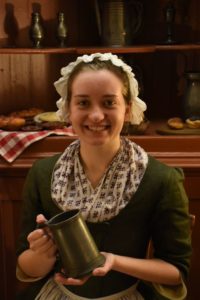
One reason students come to UMW is because of the wide range of opportunities and possibilities for majors and minors. That is the case for Gillian Brown ’22, who is majoring in historic preservation with a minor in museum studies.

“I chose these subjects because of my love for history,” says Gillian. “I was drawn by the practical aspect of historic preservation and my ever-growing love of the museum experience.”

Gillian is a recipient of the Mansheim Scholarship in Historic Preservation, and she is grateful that it allows her to pursue her passion for history and have time for extra-curricular activities. In her free time, she is an intern at Pro-Rep Sales; she is the secretary for the Museum Student Society; and she enjoys swing dancing. At one time, she worked at the Rising Sun Tavern Museum, a living history museum in downtown Fredericksburg.

Gillian does admit that it is a bit challenging being a student during the COVID pandemic, but says UMW is an amazing community. “UMW has encouraged me and my classmates to reach out to each other either in class or outside of class,” she says. “They want us to learn from each other and with each other.”.

Gillian is fortunate to have found her passion. After graduation, she hopes to work in museum administration or collections management in a museum.

Written by Darlene Mugisha ’21

Hope for the Future

Scholarship helps UMW senior look forward to aspirational career.

During the past several months, a UMW senior has faced job loss, financial uncertainty, homelessness, and hopelessness. “In August, I thought I was going to have to live in my car,” says Dela. “Fortunately, someone at UMW helped me find a place on campus so I averted disaster that time.”

Due to an unstable family situation, Dela does not have the support of her parents – financial or otherwise. Since her early teenage years, Dela has been working hard and struggling to save money to fund her dream of receiving a college degree. At times, her goal seemed out of reach when savings from extra-curricular babysitting jobs was tapped to pay her family’s rent.

Overcoming these and other hurdles in high school, she was thrilled to be accepted at Mary Washington. It quickly became her home and her safe space. She received the Marjorie Jean Frost ’44 Scholarship to help with tuition. She found employment on campus, worked off-campus jobs, volunteered at Hope House through UMW’s Community Outreach and Resources (COAR) program, and still found time and energy to pursue two majors and two minors. She had a plan to earn enough money to pay for each semester through graduation in May 2021. Then, COVID-19 changed everything.

“In the spring and summer of 2020, my campus jobs and my off-campus jobs were either reduced or eliminated,” she says. “I could not go back home, and I had no safe place to live.” She eventually found a less-than-ideal place to live temporarily, but then fall move-in was delayed due to COVID and she faced a housing gap that could extend weeks or longer.

Fortunately, she was able to live on campus then and during the 2020/2021 winter break. Through all this, she remains grateful for the donor who provided her scholarship, and she is holding on to her career aspirations of becoming a child advocacy lawyer or a social worker.

“No child should have to endure the types of hardships or stresses I have experienced,” she says. “I had no control of my own childhood at all, but someday I hope to be able to redirect the future and help others like me.”

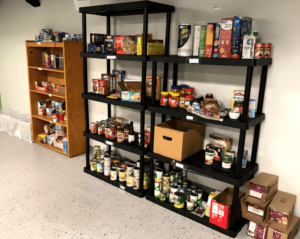
The UMW Eagle Resource Closet provides necessities at no cost to anyone who is facing food insecurity or may need toiletries, clothing, and other essentials. All items are donated and may be “ordered” through an anonymous online system.

Gayle Mitchell, director of the Rappahannock Scholars Program at UMW, says Mary Washington students often face similar situations, many of which have been made worse by the pandemic.

“The University made alternative living arrangements for several students so they would be safe and have access to internet, food, and necessities,” says Gayle. “There is always need for financial aid and private scholarships – especially for first-generation students and those from low-income families. Now, we also are seeing need for food, shelter, and other incidentals.”

Director of Financial Aid Timothy Saulnier explains that the amount of financial aid a student receives is based on a calculation using parent and student information from a federal application form. “A parent’s refusal to help is not a factor in determining expected family contribution (EFC) or amount of need,” says Timothy. “This is where flexible emergency funding that is not based on defined need could provide essential support in special circumstances.”

For more information about funding a scholarship or helping with emergency student needs, visit fund.umw.edu or contact the Office of University Advancement at advance@umw.edu.

NOTE: The student profiled above requested her full name be withheld for privacy purposes.


Article written by Donna Harter, Executive Director of Advancement Initiatives
Lasting Impressions

Donor Bequeaths $1 Million to Create Scholarships for Out-of-State Students.

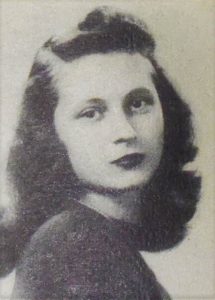
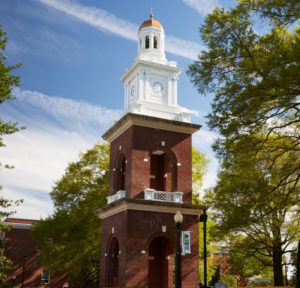
In the fall of 1942, Helen D. Gawron traveled more than 400 miles from Chicopee, Massachusetts, to begin her education on the Mary Washington campus in Fredericksburg, Virginia. As was common during those war years, she quickly joined the cry to support our troops, pitching in with students from Betty Lewis and Frances Willard dormitories to sell war stamps in the Victory Booth.
Archived issues of The Bullet from that time period feature articles about students selling Red Cross buttons, vying for the title of Mary Washington’s Bond Queen, and giving up luxuries, including “expensive weekend trips, cigarettes, cokes, candy, and chewing gum,” as recommended by President Combs.

While Helen enjoyed her studies and made many friends at Mary Washington, she transferred to the University of New Hampshire for her junior and senior years. In 1946, she graduated from UNH with a bachelor’s degree and began a successful career in communications with New England Telephone. She held numerous management positions and eventually became the first female business office manager at the company that is now part of Verizon Corporation. She also served as a director of the local Better Business Bureau and was a member of numerous clubs and organizations, including Zonta International, which supports the empowerment, equality, and education of women and girls.

Regardless of where she lived or worked, Helen stayed in touch with Mary Washington. For more than seven decades, she made regular gifts in support of UMW students – consistently increasing her support from $10, to $100, to $1,000 a year – until her ultimate gift at the time of her passing in 2018. A longtime member of the UMW Heritage Society, Helen made arrangements for a gift of more than $1 million to create scholarships for UMW students from states other than Virginia.

Even though Helen did not receive her college degree from Mary Washington, she wanted to ensure that future generations of UMW students have access to the education and experiences that made such a lasting impression on her life.

For information about estate planning or creating a scholarship, contact the Office of Gift Planning at jclarke@umw.edu or 540-654-2064.


Article written by Donna Harter, Executive Director of Advancement Initiatives

From a Hurricane to a Pandemic …

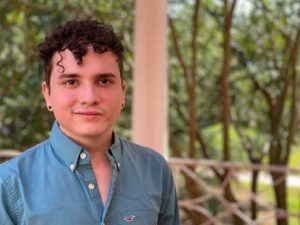
Oscar Leon ’22 is grateful for scholarships that enable him to serve as a peer mentor and orientation leader.

In the fall of 2017, Oscar Leon was living in the aftermath of Hurricane Maria in Puerto Rico. His family’s home remained standing, but they were without power and consistent running water for several months. His school theatre, however, was completely decimated.

“At first, the future seemed dismal,” says Oscar. “But the community came together to rebuild everything, and the theatre was ready in time for my senior play that spring.”

In August 2018, Oscar and his family moved to Spotyslvania County, and Oscar began classes at UMW. He was grateful to receive a scholarship and a Pell grant, but admits he had trouble adapting to life in Virginia and at UMW.

That all changed when a professor nominated him to be a peer mentor and orientation leader. Over the next two years, with help from the Albert R. Klein, Catherine Brown Simpson ’36, and June Davis McCormick ’49 scholarships, Oscar found time to study, act in plays, and serve as a mentor to students in the first-year seminar program.

“I finally found my place at Mary Washington,” says Oscar, “I tried to do it alone my first year, but everything really is better with friends and peers. Thanks to my scholarships and the Heritage Society donors who created them, I don’t worry as much about paying tuition or dealing with student loans. That, too, has made a big difference.”

In the spring of 2020, Oscar once again faced the possibility of having a much-anticipated theatrical performance canceled when the COVID-19 pandemic led to the suspension of on-campus classes and events. He was thrilled, however, when the cast of Much Ado About Nothing was able to perform the play via online streaming.

As a junior theatre major, Oscar works in the Klein Theatre management office and is learning other practical and marketable skills. While his career goal is to become an actor in New York City, he has learned firsthand that you must plan for the unexpected.

For information about creating scholarships for students, contact the Office of Advancement at advance@umw.edu or 540-654-1024.


Article written by Donna Harter, Executive Director of Advancement Initiatives